Empty the Bag: The Improvised Toolkit Inside America's Psych Units
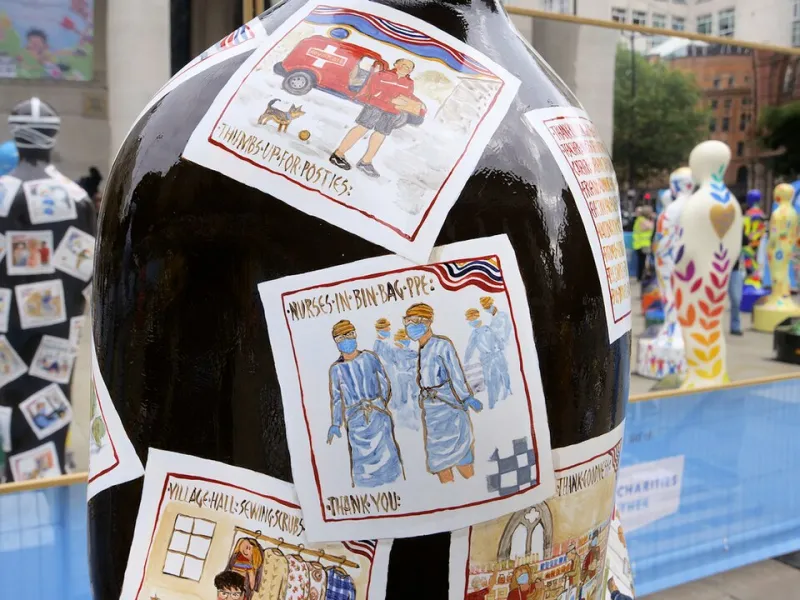
Photo: David Dixon , CC BY-SA 2.0, via Wikimedia Commons
Ask a psychiatric nurse what's in their work bag and you'll usually get a laugh before an answer. That's because the bag — a worn tote, a backpack with a broken zipper, a clearance-rack crossbody from Target — is never just a bag. It's a field kit for a job that rarely provides the tools it asks for.
We asked nurses from Ohio to Oregon to empty theirs out on the kitchen table and walk us through it, item by item. What they pulled out said as much about American mental health care as any policy paper could.
The Stress Ball Economy
Nearly every bag contained something squeezable. A nurse in Columbus, Ohio — fourteen years on an adult acute unit — pulled out three: a squishy banana, a foam ball from a drugstore, and a hardened lump she admitted was "basically a rock at this point."
"We hand these out constantly," she explained. "Tactile grounding is one of the cheapest, most effective things we've got. But nobody's ordering them. So nurses buy them. I've probably spent two hundred dollars of my own money on stress balls."
That's a pattern that repeated across almost every conversation: the interventions that work best on a locked unit are also the ones no procurement department thinks to stock.
Laminated, Dog-Eared, Essential
The second most common item: coping skill cards. Small, laminated rectangles listing grounding techniques — name five things you can see, four you can hear, three you can touch.
A night-shift nurse in Phoenix keeps hers rubber-banded together like a deck of playing cards. "When somebody's escalating, you don't hand them a worksheet. You hand them a card. It's portable. It's theirs. Some patients keep them in their socks."
The lamination is usually done at home, on the same personal laminating machines that fueled a thousand pandemic-era craft projects. One nurse joked that Scotch should sponsor psychiatric nursing.
The Printout That Won't Die
Then there are the breathing exercise handouts — printed, copied, folded, refolded, handed out, and often returned crumpled in a pocket or a laundry bin.
"I've probably printed the same box-breathing diagram four hundred times," a Michigan nurse told us. "There's no official version. I found it online in 2016 and it's mine now."
That single sheet of paper represents a quiet truth about psych units: the evidence-based stuff — the DBT skills, the sensory modulation, the paced breathing — reaches patients through whatever a nurse can print at home and smuggle past a broken office printer.
The Sensory Grab Bag
Beyond the basics, the bags get personal. Weighted lap pads that had to be "checked out" through a shared spreadsheet. Noise-canceling earplugs bought in bulk. A tin of peppermint oil for headache and grounding alike. A small dish of ice cubes — "cold is a great interrupter for a panic spike, and the ice machine is free."
One veteran in rural Pennsylvania carries a deck of Uno cards. "You'd be amazed what a hand of Uno does for a kid in crisis. It's not in any textbook. It works."
What the Bag Says About the System
Here's the uncomfortable part of this inventory: almost none of it was purchased by an employer. Nurses estimated spending anywhere from twenty to several hundred dollars a year on supplies that directly support de-escalation and comfort — the very things that reduce restraints, code alarms, and injuries.
A few hospitals are changing that. Some units now have sensory carts stocked with fidgets and weighted blankets. A handful of states have explored reimbursement for low-cost therapeutic supplies. But those remain exceptions, not standards.
Honor the Bag
This Nurses Day, before you order the coffee mug, consider what's actually being carried. A Target gift card for supplies. A case of stress balls delivered to the unit. A pack of card sleeves so a nurse's coping deck survives another year.
The chemist of calm doesn't need a lab. She needs lamination, a laminator, and maybe someone else to buy the stress balls for once.