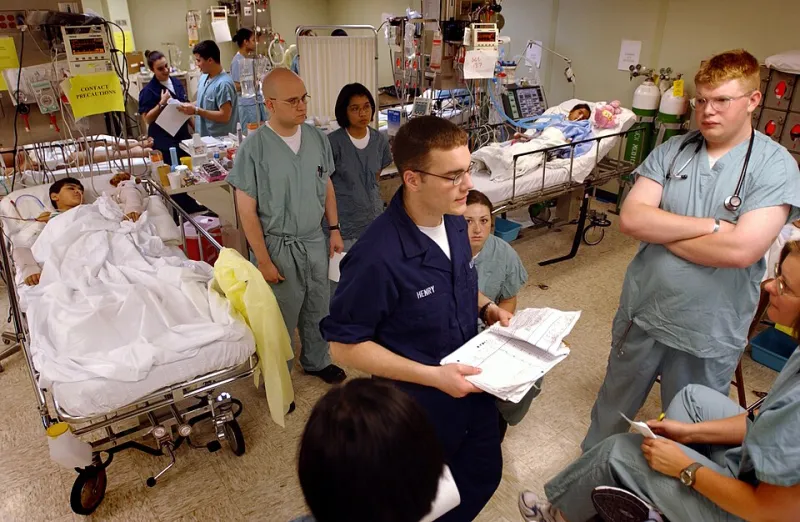
Paper Plates and Gratitude Rounds: How Thanksgiving Gets Rebuilt Inside the Unit
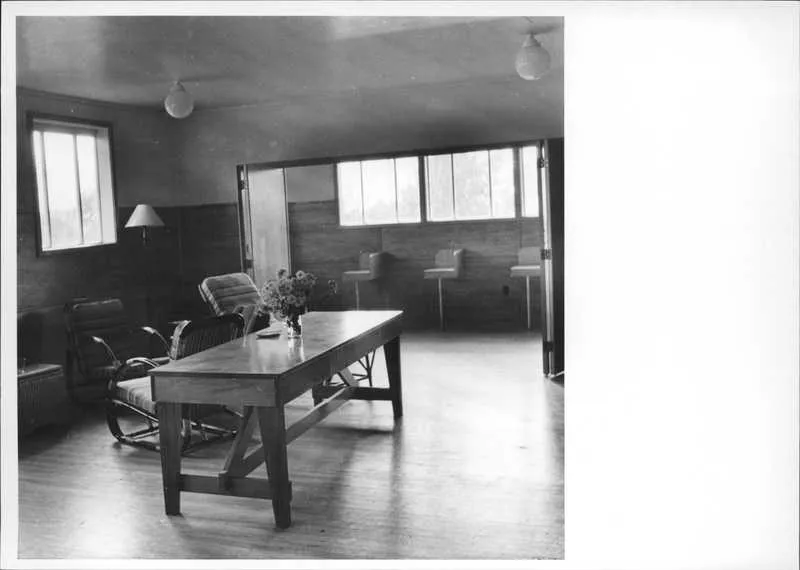
Photo: Unknown, Public domain, via Wikimedia Commons
The day room on a psych unit is not designed for celebration. It's designed for sight lines. Chairs bolted or heavy, a table bolted or heavy, a television at an angle where staff can see every face in the room at once.
And every November, nurses turn it into a dining room anyway.
The Holiday Doesn't Pause
Thanksgiving 2026 lands on Thursday, November 26. On most inpatient psych units in the United States, that Thursday is a normal staffing day with a slightly strange breakfast. Admits still come in. Someone is still on one-to-one. Someone is still on their third day of a hold and furious about it.
“People assume the holiday is sad for the staff,” says Renee, a charge nurse on an adult unit in the Midwest. “It's not sad. It's just extra. You're doing your job and also being the activities department and also being the person who notices that Mr. L. hasn't said a word since Tuesday because his brother always hosted.”
That noticing is the invisible part of holiday coverage. It's also the part nobody puts in a job description.
A Slow Cooker and a Plan
The units that do this well are not doing anything glamorous. They're doing logistics, early.
On Renee's unit, the planning starts around November 10. A sign-up sheet goes up in the break room — not for staff food, for the patient meal, because the tray line on a holiday is fine but it is not a holiday. The rules are specific and they exist for a reason: everything has to be commercially prepared or cooked in the unit's own slow cooker under nurse supervision, nothing brought from a home kitchen, nothing that requires a knife on the floor, nothing in a glass dish.
“Paper plates are not a compromise, they're a design choice,” she says. “You don't want someone holding a ceramic plate they're afraid of breaking. You want people eating with their hands and talking.”
By 11:30 the day room smells like a church basement. The slow cooker has been going since 6 a.m. Somebody's aunt's cornbread dressing recipe, made in a disposable pan, shows up with a nurse who worked the night before and came back for the meal on purpose.
Gratitude Rounds
The most interesting ritual isn't the food. It's what happens in the twenty minutes before it.
At a unit in the Pacific Northwest, the nurses run what they call gratitude rounds — a short community meeting where each person, patients and staff, can say one thing they're grateful for or pass. Passing is fine and passing is common. The structure is deliberately low-pressure: no eye contact required, no sharing beyond a sentence, no processing afterward.
“It goes one of two ways,” says Theo, an RN there. “Either it's ninety seconds and everyone says ‘pass,’ or somebody says something honest and the whole room shifts. Last year a guy who'd barely spoken in a week said he was grateful his daughter still took his calls. And then two other people said things. And then we ate.”
The point isn't gratitude as a mood. It's gratitude as a permitted topic — a slot on the schedule where the thing people are already feeling has somewhere to go.
Grief Is a Guest at the Table
Holidays are also a known pressure point in psychiatric care. Anniversaries, family gatherings, and the gap between what a holiday is supposed to feel like and what it actually feels like all concentrate in a single week. Nurses know this the way farmers know weather.
That means the Thanksgiving shift includes a second set of tasks that never appear on a care plan: watching the person who went home for four hours and came back quieter. Checking in with the patient whose family did not call. Being ready for the conversation that starts with “I don't know why I'm even here” and does not have a tidy ending.
“We don't try to make anyone happy,” Theo says. “We try to make the day survivable and a little warm. Those are different goals and honestly the second one is more achievable.”
There's also the staff side. A nurse working Thanksgiving is often a nurse whose own family is eating without them. Some units handle this by shifting the meal to a shift-friendly hour — a 2 p.m. plate for days, a 9 p.m. version for nights, leftovers labeled and dated in the break room fridge. Somebody's actual family dinner becomes Saturday instead of Thursday, and everyone on the unit understands that without needing it explained.
What Managers Can Actually Do
Recognition on a holiday is not a card. It's arithmetic and attention. A few things that nurses said made a difference:
- Staff the holiday, don't just schedule it. One extra aide on Thanksgiving is worth more than a gift card, because it's the difference between a nurse sitting with a patient and a nurse deciding whether they can.
- Cover the meal, not the shift. Leadership bringing in a catered lunch at noon is nice. Leadership covering the unit for forty-five minutes so the whole team actually eats together is the thing people remember in February.
- Pay for the day-room meal. A hundred dollars of grocery money for a slow cooker Thanksgiving is a rounding error in a hospital budget and a genuine gesture on a unit.
- Ask in advance, not on the day. “Do you want the early shift or the late shift” beats “we'll figure it out,” especially for nurses with kids.
- Write the note after, not before. A short, specific message the following week — naming the thing they did, not the fact that they worked — lands harder than a generic December email.
- Remember the night shift. The 7 p.m. to 7 a.m. crew gets the leftovers and the quiet. Someone should be checking that the food is still there and still good at 1 a.m.
The Cleanup Shift
By 2 p.m. the day room is back to being a day room. Chairs wiped, table cleared, the television on a channel nobody chose. The slow cooker goes home with whoever brought it.
What's left is small and strangely durable: a patient who ate a real meal, a nurse who got to sit down for twenty minutes, a unit that briefly looked less like a facility and more like a place people live.
“Nobody's writing that in a discharge summary,” Renee says. “But it's the work. It's the actual work.”
If you're working November 26 this year, we hope someone covers for you at some point. And if you're the one doing the covering — thank you. That's what recognition looks like when it's real.