Fifty Years of Faces: The Badge Photos Quietly Charting the History of American Psychiatric Care
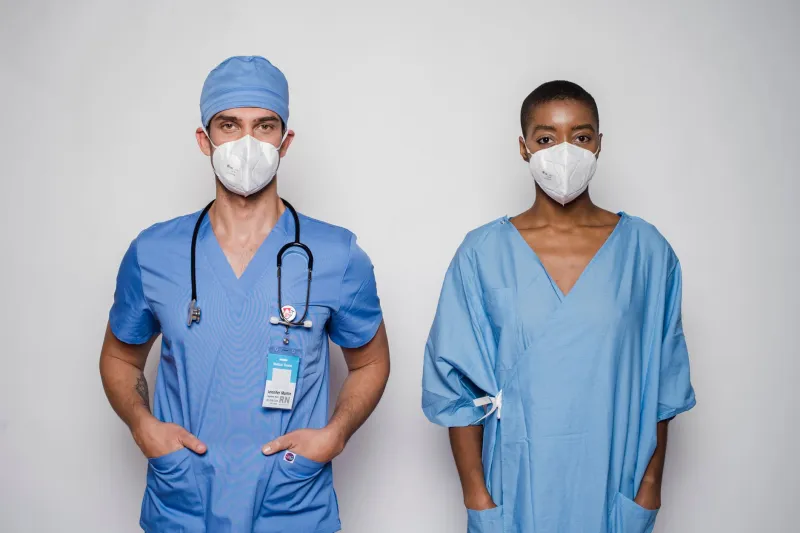
It's the smallest artifact in American mental health care: a badge photo. An inch of laminate, a slightly awkward smile, a name that maybe changed when a nurse got married or moved on. Stack fifty years of them side by side and you don't just see individual careers. You see the entire story of how this country treats its most vulnerable patients — and the nurses who showed up for them through every policy shift, every ward closure, every crisis nobody planned for.
We asked mental health nurses across the US to dig out their old IDs and tell us what those photos remember. The stories they shared surprised even us.
1974: The State Hospital Era, in Polaroid
The oldest badge in our collection belongs to Margaret, 72, who started at a large state psychiatric hospital in Ohio in the mid-'70s. Her photo is grainy, shot on what looks like an ID camera bolted to a wall. Her white uniform cap is perfectly starched.
"They tell you in nursing school that the asylums were all closed by the '70s," she told us, laughing. "Honey, I worked in one. We had over a thousand patients on our campus. My badge number was four digits."
Margaret's badge was heavy — literal laminated cardstock clipped to a uniform pocket. It listed her ward, not her title. "Cottage 9," she says, like it was a family member's name.
What the photo doesn't show is the reality behind it: chronic understaffing, sedation as a management tool, and nurses who, in her words, "loved patients the system had already given up on." Those badge photos from the era are rare — many hospitals didn't archive them, and most nurses never thought to keep theirs.
Margaret kept hers in a shoebox for five decades.
The 1980s and '90s: When the Wards Emptied Out
The next cluster of badges tells a harder story. Through the '80s, deinstitutionalization accelerated. State hospitals downsized or shuttered entirely. Community mental health centers were supposed to pick up the slack — and often couldn't.
Diane's badge from 1988 shows the shift immediately. Gone is the cap; her photo shows a scrub top and a lanyard, taken at a community-based program in Michigan. "My whole career happened during the transition," she says. "One year I'm passing meds to sixty patients on a locked ward. A few years later, I'm doing home visits in a van, meeting people who were living wherever they could."
Her badge photo is the first in our collection where the nurse is smiling. "We had more hope then," she admits. "We really believed community care was going to work. Some days it did."
The badges from this era also show the professionalization of psychiatric nursing — titles like RN, BSN, and later PMH-NP appearing under names, credentials stacking up as the specialty fought for recognition.
The 2000s: Electronic Badges, Electronic Records, Same Shortage
By the early 2000s, badges went digital. Photo IDs became computer-printed, tied to door access systems and medication carts. The uniforms got scrubbier, the backgrounds got corporate blue.
But look closer at this era's badges and you'll spot something else: the quiet return of the crisis. Psychiatric ER boarding became standard. Corrections became the nation's de facto largest mental health provider. Nurses like Robert, whose 2006 badge photo shows him at a county hospital in Texas, describe the decade as one of "doing triage for a system that was already on fire."
"My badge got me through six locked doors to reach my patients," he says. "You start to wonder who's really locked in."
Today: The Badge as Shield, the Smile as Rarity
The most recent photos in our archive share a striking feature: almost nobody is smiling in them.
It's not cynicism, exactly. Today's psych nurses are working through a staffing shortage the American Nurses Association has called a national crisis, with travel contracts, mandatory overtime, and rising patient acuity. The badge photo, taken on day one before any of that weighs on you, often captures the last optimistic moment of a career.
And yet — the stories attached to these newest badges are the most defiant. Nurses describe launching peer support programs, leading de-escalation training, pursuing psychiatric nurse practitioner degrees at record rates. The badge may look tired; the person behind it isn't done.
Why One Laminated Photo Is Worth a Textbook
Historians of American medicine have written thousands of pages about deinstitutionalization, the community mental health movement, and today's behavioral health workforce shortage. But there's something a badge photo communicates that no policy paper can: these were people. They showed up. They adapted when the ground shifted under them, again and again.
A cap in 1974. A lanyard in 1988. A barcode in 2006. A tired but steady face today. Same profession. Same calling. Completely different America around them.
That's why we're building something bigger.
Add Your Badge to the Archive
For Mental Health Nurses Day — and every day after — we're collecting badge photos from psych nurses past and present for a follow-up gallery celebrating five decades of psychiatric nursing.
Here's how to participate:
- Dig out your oldest ID badge, or a photo of it if the laminate has seen better decades
- Snap a picture of you holding it, or scan the badge itself
- Share one or two sentences about the year, the setting, and what's changed since
- Email it to our submissions team or tag us on social media with #MyBadgeStory
We'll feature a curated gallery in an upcoming piece, with your permission and only the details you choose to share. No patient information, no facility names unless you want them — just faces and the stories behind them.
Fifty years from now, someone will look at today's badge photos and see the same thing we see now: proof that in every era of American mental health care, no matter how broken the system, there were nurses standing in the doorway.
Show us yours.